


Why Work From Home Reduces Productivity in Many Companies
Not every remote employee is lazy. Some people are highly disciplined and productive from home.
But many employees struggle when there is no direct supervision.
At home, distractions are everywhere. Mobile phones, TV, social media, family conversations, sleeping late, and personal work slowly reduce focus. Some employees start working casually because nobody is physically watching them.
From my experience, the biggest problem is not remote work itself.
The real problem is lack of visibility.
As a business owner, you can not improve what you can not track.
When you don't know:
how much time employees spend on tasks,which projects are delayed, who is actually working, and where team productivity is going, then your business starts losing control.
That is exactly what happened in many companies after remote work became normal.
Business Owners Pay the Price
Employees may enjoy comfort at home, but business owners carry the pressure.
You still need to:
- pay salaries
- manage clients
- maintain business growth
- handle deadlines
- and protect company reputation
If employees delay work, clients blame the company owner-- not the employee. I remember one situation in my company where a client project got delayed by almost two weeks. During online meetings, the team kept saying "work is in progress." But when I checked properly, very little real work had actually been completed. That moment changed my thinking completely. I realized trust is important, but blind trust is dangerous in business.
Remote Work Without Tracking Is a Risk
Many companies made one major mistake.
They allowed work from home but never created a proper monitoring system.
Without clear task tracking, remote teams slowly become disconnected. Employees start managing their own schedules without accountability. Some work sincerely, while others take advantage of the situation.
This creates unfairness inside the company.
The hardworking employees feel frustrated because everyone gets paid equally, even when effort levels are completely different.
Over time, team discipline becomes weak.
That is why smart companies now use tracking systems and the Best Project Management Software to maintain transparency.
Tracking is not about spying on employees.
It is about understanding workflow, improving performance, and making sure business operations stay healthy.
How Smart Business Owners Solve This Problem
The solution is not forcing everyone back to office immediately. The real solution is creating accountability.
Good business owners now focus on:
- task tracking
- project visibility
- employee productivity monitoring
- file management
- and clear communication
When employees know their work progress is visible, productivity naturally improves. Deadlines become clearer. Managers can identify delays early. Teams become more responsible. This is where tools like TrackPM help businesses manage remote teams properly.
Why Business Owners Are Using TrackPM
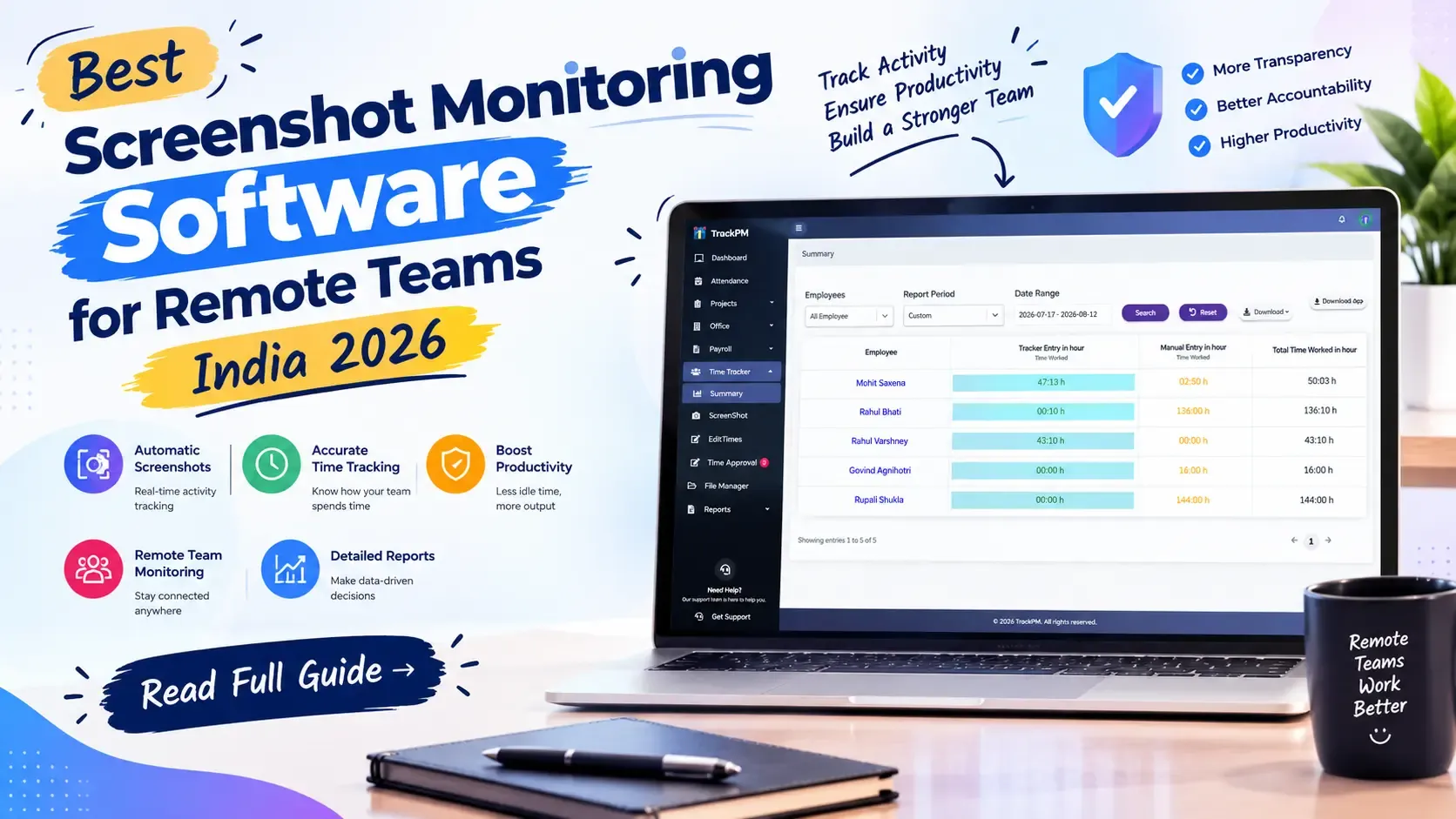
TrackPM helps companies manage projects, employee tasks, files, and workflow from one platform. As a business owner, I realized spreadsheets and WhatsApp messages were no longer enough for remote work management.
We needed one system where:
- Tasks could be assigned clearly
- progress could be tracked
- files could be managed properly
- and managers could see team performance in real time
That is why many companies are now searching for the Best Project Management Software and the Best File Management Software in India.
Because remote work without systems creates confusion.
TrackPM helps solve this problem by improving transparency inside teams.
Instead of constantly asking employees:
" Did you finish the work?"
" Why is this delayed?"
" Who updated the file?"
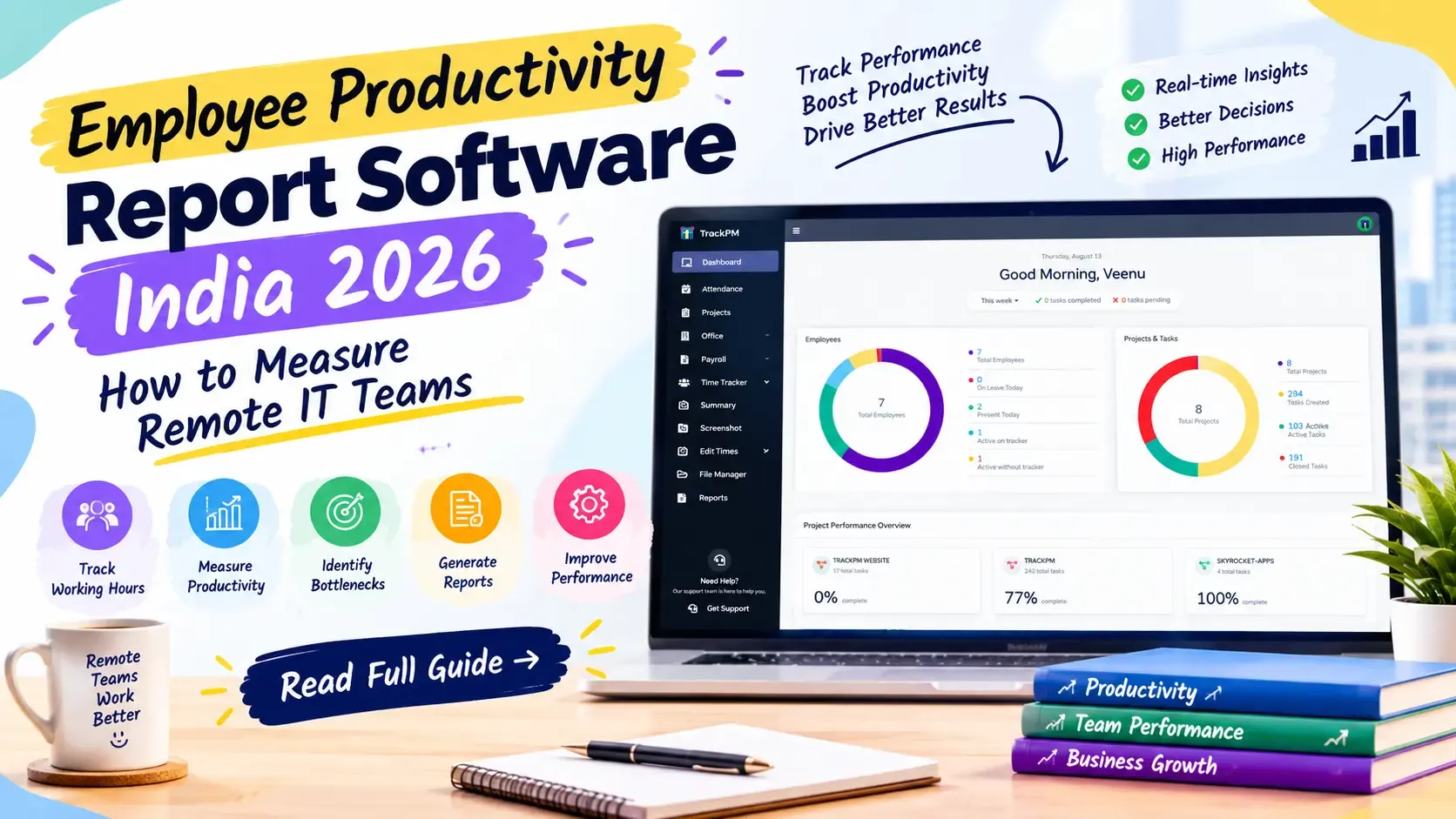
everything becomes visible inside one dashboard.
This saves time, reduces confusion, and improves accountability.
The Future of Remote Work in India
Remote work is not ending anytime soon in India. Many companies prefer hybrid models because office costs are increasing. Employees also want flexibility. But the future belongs to businesses that balance flexibility with accountability. Smart business owners are no longer depending only on trust. They are building systems that help teams stay productive from anywhere. That is why demand for the Best Project Management Software is growing rapidly in India.
Businesses want tools that:
- improve team coordination
- reduce project delays
- manage files securely
- and increase employee productivity
Companies that fail to adapt may continue losing money silently while productivity keeps falling.
Frequently Asked Questions
How can Indian business owners ensure remote employees are actually working?
The most effective approach for Indian business owners is to shift from monitoring presence to measuring output. Define clear daily and weekly deliverables for each team member. Use a project management tool where every developer's tasks are visible and updated daily. Review task completion weekly — not daily check-ins. Combine this with time tracking software that shows active vs idle hours and task-level logs. This approach gives accountability without micromanagement and is more reliable than trying to verify that someone is sitting at their desk.
What is the biggest mistake Indian founders make with remote team management?
The biggest mistake is measuring activity instead of output — checking whether employees are online, responding to messages quickly, or attending every video call, rather than checking whether they are completing the work that matters. Activity metrics are easy to fake and create perverse incentives (employees staying online rather than doing deep work). Output metrics — tasks completed per sprint, billable hours delivered, features shipped — are harder to fake and aligned with business outcomes.
How do I handle underperforming remote employees in an Indian IT company?
Address underperformance through data, not perception. Pull the task completion rate for the past 4 sprints. If completion rate is below 60%, discuss the pattern in a 1:1 — ask what is blocking them before assuming disengagement. Common causes: tasks are too large (need breaking down), they are blocked by others (dependency problem), or they are on the wrong project for their skill set. Document the conversation and agreed improvement targets. If performance does not improve after one sprint, escalate through your HR process with the documented data as evidence.
Is screenshot monitoring the right solution for remote team accountability in India?
Screenshot monitoring is one tool among several — not a standalone accountability solution. It is most useful for client billing verification and identifying idle time patterns. As a trust and accountability tool, task-level time logging (where developers log time against specific work items) is more effective and less invasive than continuous screenshot monitoring. Most Indian IT founders who implement screenshot monitoring find it most valuable for billing disputes with clients, not for day-to-day team management.
How many hours should a remote IT employee in India work per day?
Under the OSH Code 2020, the maximum working hours for employees in India is 9 hours per day and 48 hours per week. Any hours beyond this must be compensated as overtime at double the ordinary wage rate. Most Indian IT companies operate on an 8-hour standard working day. For remote employees, the contracted working hours should be specified in the employment agreement. Productive working hours — after excluding meetings, context-switching, and admin — are typically 5–6 hours of deep work per 8-hour day for knowledge workers.