

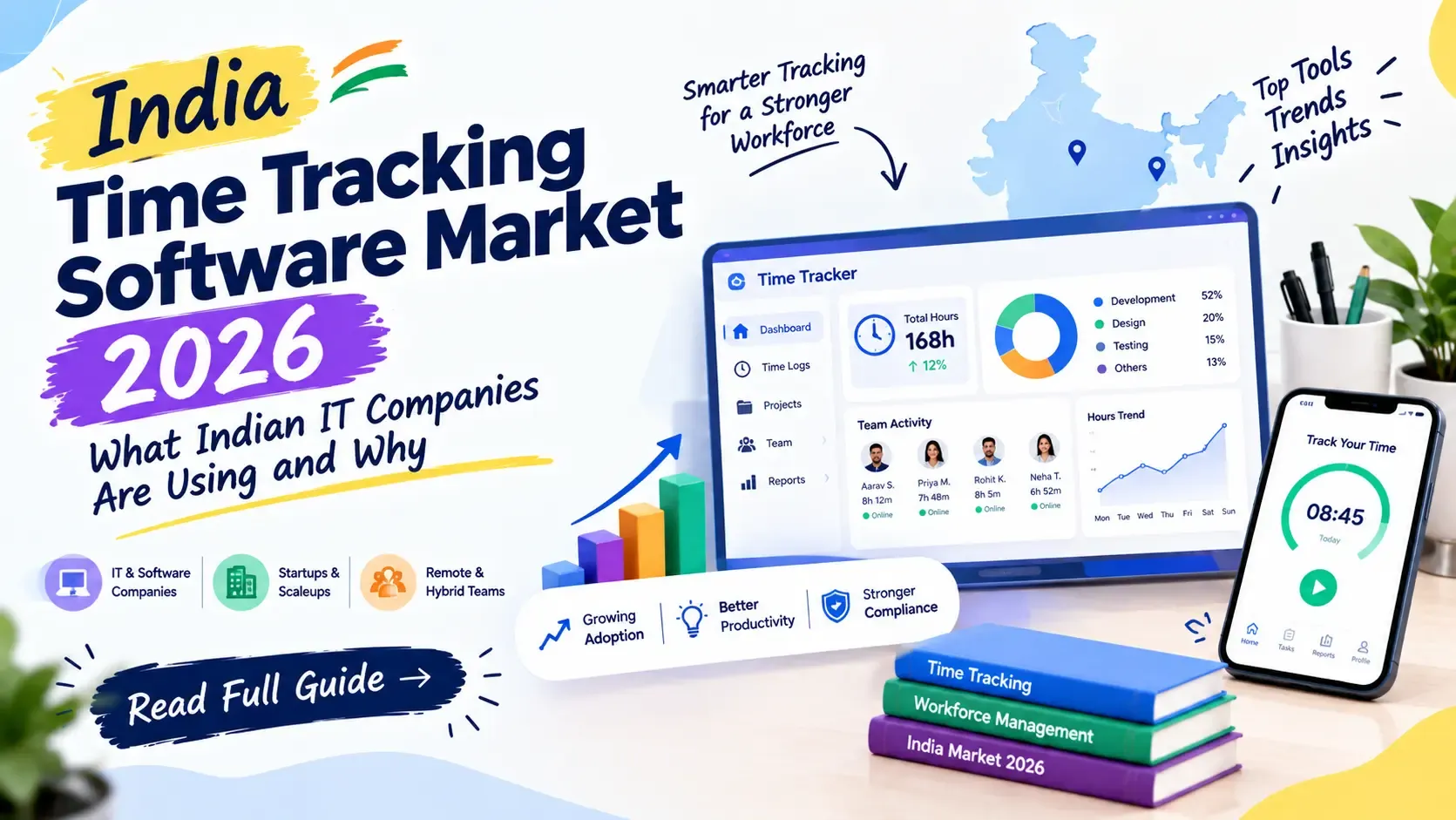
The India time tracking software market has changed more in the last 24 months than in the previous decade. What was once a category dominated by Western tools with USD pricing and features built for American remote work has become a genuinely competitive market — with India-built platforms capturing a growing share of the 54 lakh-strong IT workforce.
This guide covers the current market size, what Indian IT companies are actually using, why switching patterns have accelerated in 2026, and what to look for when evaluating a time tracking tool for an Indian IT team.
Market Size and Growth — India Time Tracking Software 2026
The global time tracking software market was valued at approximately USD 6.66 billion in 2026, growing at a compound annual growth rate of 13.46% through 2034. The Indian market is the fastest-growing segment within Asia-Pacific.
Three forces are driving growth specifically in India:
- Scale of the IT workforce. India's technology industry employs more than 54 lakh people as of the Government of India's December 2025 figures. Digital roles account for approximately 37% of the total IT workforce. A significant portion of this workforce — particularly in SMB IT companies with 10–200 employees — still operates without a formal time tracking system.
- Permanent shift to remote and hybrid work. The post-2020 shift normalised distributed teams across Indian cities. A developer in Hyderabad, a designer in Bengaluru, and a QA engineer in Chennai working on the same project cannot be managed through office presence. Time tracking became the primary visibility layer for Indian IT managers managing distributed teams.
- Labour compliance tightening. The four new Labour Codes — particularly the Code on Wages 2019 and the OSH Code 2020 which came fully into force on November 21, 2025 — tightened overtime calculation requirements, maximum working hour limits, and FnF settlement timelines. Accurate, documented time records are now a compliance requirement, not just a productivity preference.
The IT sector leads time tracking software adoption in India with approximately 26% market share — higher than any other sector. Subscription-based models dominate at around 61% of the market. Small and medium businesses account for approximately 54% of total adoption.
What Indian IT Companies Currently Use — The Three Tiers
Tier 1 — Western Tools with USD Pricing
The largest installed base in Indian IT remains Western tools: Hubstaff, Time Doctor, Toggl Track, and Harvest. These tools entered India early, integrate with tools like Jira and GitHub that Indian development teams use, and have strong brand recognition in the developer community.
The core pain points Indian IT teams report:
- Per-seat cost for time tracking alone. Hubstaff's Starter plan costs approximately ₹420–₹450 per user per month at current exchange rates. For a 20-person team, this is ₹8,400–₹9,000 per month — for time tracking only, before project management, HR or payroll.
- No native Indian payroll integration. Hubstaff, Time Doctor, and Toggl generate time reports. Indian companies then manually export those reports and reconcile them with their payroll system (Keka, greytHR, or Excel-based) to calculate PF, ESIC, TDS, and LOP deductions. This manual reconciliation takes 1–2 days per month and is the single most common trigger for switching.
- Screenshot monitoring configured for Western compliance requirements, not DPDPA 2023. Indian companies deploying screenshot monitoring must ensure employees are informed and have consented under the Digital Personal Data Protection Act 2023. Western tools do not make this configuration easy.
Tier 2 — Indian HR Platforms with Time Tracking Add-Ons
Keka, greytHR, and Darwinbox are the dominant HRMS platforms in India. Each has added time tracking features in the last two years. These platforms are INR-priced, understand Indian statutory requirements, and have strong payroll integration.
The gap: their time tracking is attendance-level, not task-level. They record when employees clocked in and clocked out. They do not record which tasks were worked on, which project consumed which hours, or which hours are billable to which client. For Indian IT companies doing client project delivery or sprint-based development, attendance-level tracking is insufficient.
Tier 3 — India-Built All-in-One Platforms
The fastest-growing segment in 2026 is India-built platforms combining task-level time tracking with attendance, leave management, payroll, project management, and IT asset tracking — designed specifically for Indian IT team workflows and compliance requirements.
TrackPM is positioned in this segment. Time tracking connects directly to Kanban and Scrum boards (each task log shows which sprint story it was billable to), feeds into payroll (LOP, overtime, and leave deductions calculated automatically), and includes screenshot monitoring with DPDPA-appropriate employee transparency, on pay-per-use pricing you can pay in INR.
Why Indian IT Teams Are Switching in 2026 — The Three Triggers
The switching pattern from Western tools to India-built platforms accelerated significantly in 2026. Three triggers account for most switching decisions:
- Trigger 1 — Payroll reconciliation breakdown. Teams grow past 20 people. The monthly manual transfer of time data from Hubstaff to the payroll system becomes a 2-day process. Someone miscalculates LOP deductions. A developer's overtime is underpaid. The payroll team and the project team are looking at different numbers. This moment — usually in month 14–18 of using a Western time tracking tool — is when companies search for an integrated alternative.
- Trigger 2 — USD cost at scale. At 30 users, Hubstaff costs approximately ₹12,600 per month. Add Keka for HR (₹6,999/month) and Jira for project management (₹13,600/month for 20 users) and the combined tool cost for a 30-person Indian IT team is ₹33,000–₹35,000 per month. When founders calculate this total cost for the first time, consolidation to a single pay-per-use platform becomes an obvious financial decision.
- Trigger 3 — Client billing requirements. Enterprise and government clients increasingly require documented, task-level time logs for billing verification. A summary report from Hubstaff showing "Developer A worked 9.5 hours on Wednesday" is not sufficient. A task-level log showing "Developer A spent 3.5 hours on Feature X (Ticket #247), 2 hours on Bug Fix Y (Ticket #251), and 4 hours on client call and meeting documentation" is what enterprise clients expect. This requirement forces teams to adopt task-level time tracking systems.
What to Look for in Time Tracking Software for Indian IT Companies
- Task-level tracking, not day-level tracking. Clock-in and clock-out tells you someone worked 9 hours. Task-level tracking tells you those 9 hours were split across 3 client deliverables and 1 internal admin task. Only task-level data enables accurate client billing, sprint velocity measurement, and meaningful productivity visibility for distributed teams.
- Direct payroll integration with Indian compliance. Time data that cannot feed automatically into PF, ESIC, TDS, LOP, and overtime calculations creates a monthly manual process. Look for a platform where time tracking and payroll are either in the same system or have a verified automated integration with your specific payroll tool.
- Screenshot monitoring with DPDPA 2023 compliance. If you need screenshot-based monitoring, confirm the tool allows you to configure employee notification and consent, set monitoring hours (working hours only — not personal time), and provides employees with access to their own monitoring data. These are DPDPA requirements, not optional features.
- Pricing that fits a small Indian team. Look for pay-per-use pricing with no minimum seats and no annual lock-in, and the option to pay in INR. A tool built for India also prioritises Indian compliance updates — new Labour Code rules, state-specific changes — rather than treating India as an aftermarket.
- Setup under 30 minutes without an IT administrator. Enterprise time tracking tools require dedicated setup time and technical administration. For a 10–50 person Indian IT startup, the founder or team lead sets up all software. Choose a tool that is operational the same day.
How TrackPM Fits the Indian Time Tracking Market
TrackPM's time tracking module was designed for Indian IT teams from the start — not adapted from a Western product.
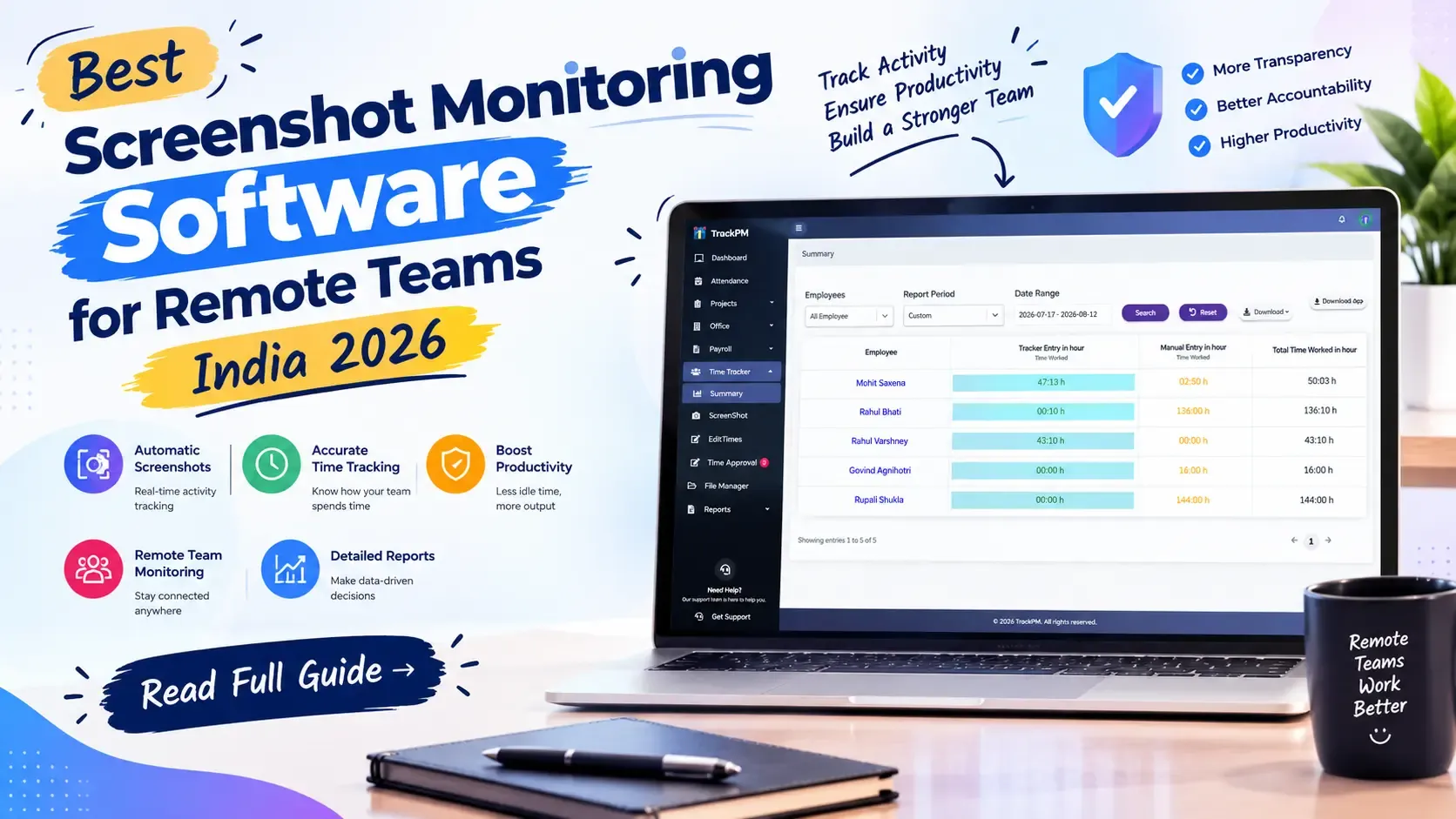
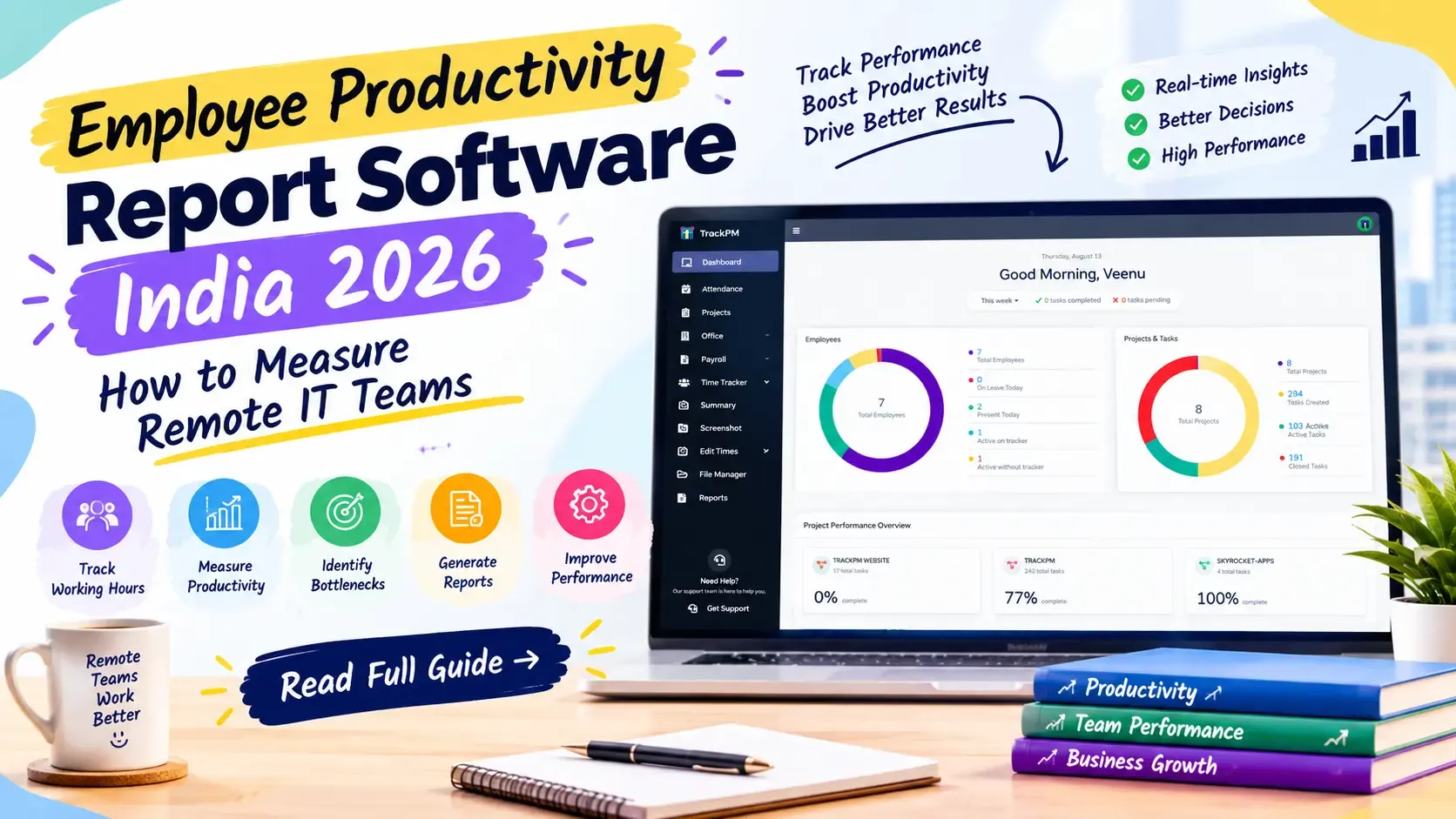
Time is tracked at the task level inside Kanban and Scrum boards. Developers log hours against specific sprint tasks. Screenshots are captured at configurable intervals with employee-visible transparency logs. Idle time is automatically excluded from billable hours. Time data feeds directly into TrackPM's payroll module — LOP deductions, overtime calculations, PF, ESIC, and TDS all run from the same verified time data with no manual export required.
For Indian IT companies currently paying separately for Hubstaff (time), Keka (HR/payroll), and Jira (projects): TrackPM replaces all three with one pay-per-use platform built around Indian compliance requirements.
Frequently Asked Questions
What is the India time tracking software market size in 2026?
The global time tracking software market is valued at approximately USD 6.66 billion in 2026, growing at 13.46% CAGR. India is the fastest-growing Asia-Pacific segment, driven by the 54 lakh-strong IT workforce, the shift to remote and hybrid work, and tightening Labour Code compliance requirements. The IT sector leads Indian adoption with approximately 26% market share. Small and medium businesses account for 54% of total adoption.
What is the best time tracking software for Indian IT companies in 2026?
For Indian IT startups needing task-level time tracking integrated with payroll and project management on pay-per-use pricing, TrackPM is the most integrated India-built option. For HR-focused tracking with strong Indian statutory compliance, Keka and greytHR are well-established. For teams already invested in international tools like Jira, Hubstaff and Toggl Track remain feature-complete options. The best tool connects time data directly to payroll without manual export.
Why are Indian IT companies switching from Hubstaff in 2026?
The three most common switching triggers: payroll reconciliation breakdown when teams grow past 20 people and the monthly manual data transfer from Hubstaff to the payroll system becomes a 2-day process; USD cost at scale becoming financially significant relative to pay-per-use alternatives with more features; and enterprise client billing requirements demanding task-level time logs that summary reports cannot satisfy.
Does time tracking software need to comply with DPDPA 2023 in India?
Yes. The Digital Personal Data Protection Act 2023 requires Indian companies to inform employees about what monitoring data is collected, for what purpose, and for how long it is retained. For tools that use screenshots, activity monitoring, or keystroke logging, employees must be notified and must have given consent. The monitoring must be limited to working hours and the specific purpose stated. Companies should verify that their time tracking vendor has documented DPDPA compliance posture.
What is task-level time tracking and why does it matter for Indian IT companies?
Task-level time tracking records not just that an employee worked for 9 hours on a day, but which specific tasks they worked on and for how long — for example, 2.5 hours on Feature A, 1.5 hours on Bug Fix B. This enables accurate client billing, sprint velocity measurement, and productivity visibility for distributed teams. Attendance-level tracking (clock-in and clock-out only) does not provide any of this data.
Conclusion
Track time at the task level, connect it to Indian payroll, and manage your team in one platform.
Start Free Trial — No Credit Card Required · See TrackPM's Time Tracking Features